
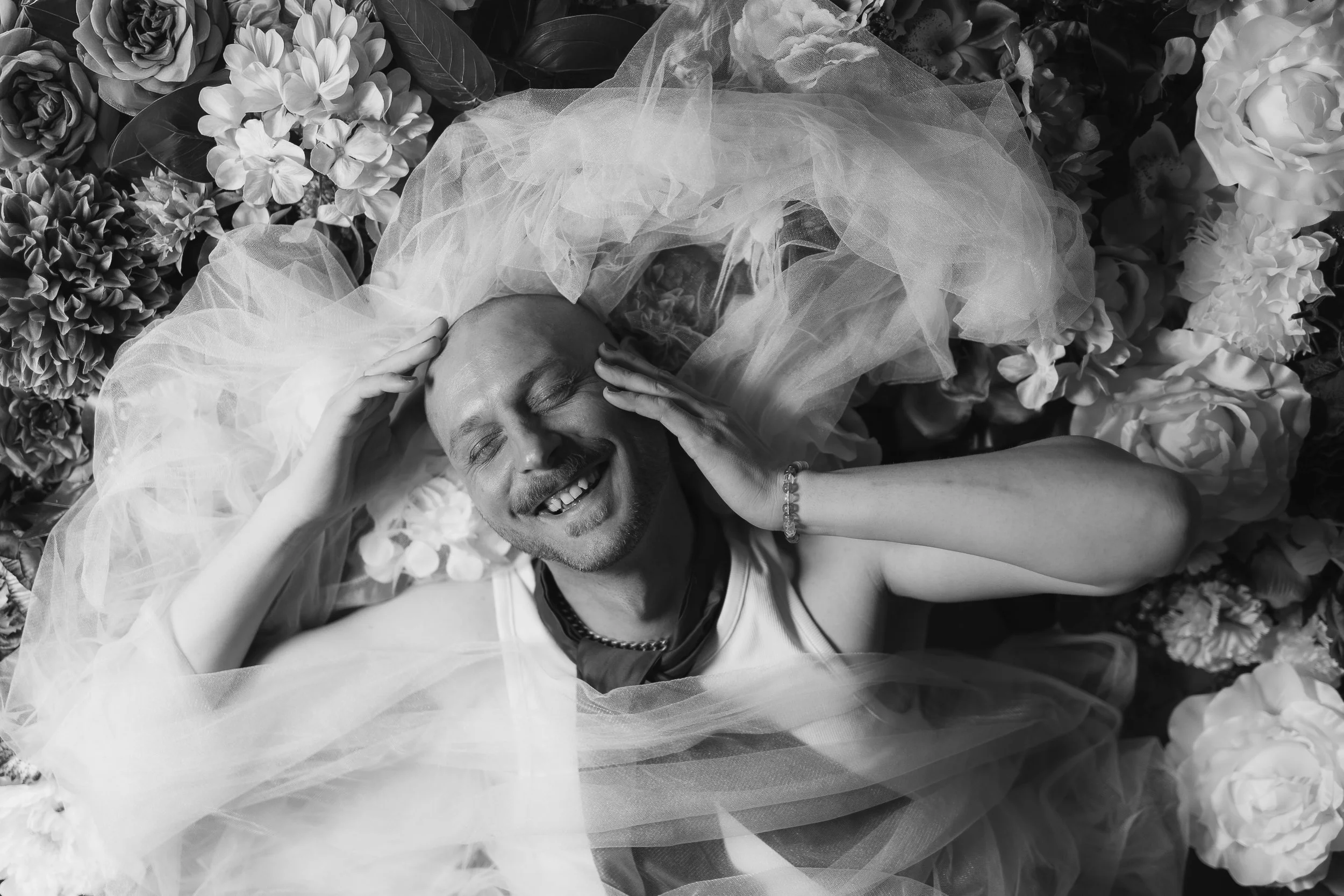
A photo session is always exciting. It’s hard to know how to be in front of the camera, how you’ll look, and whether you’ll look like yourself at all. You end up worrying about your hands, angles, and all sorts of things that are very difficult to grasp when you’re standing in front of a camera lens. In this text, I’ll share what you can do so that the real, authentic you shows up in your photos.
What can I do to feel more at ease during a photo session?
This question often comes up in my trainings and during sessions. First, I want to say that it is never the subject’s job to support the photo session. The person being photographed does not need to do anything to please the photographer or behave in a certain way. I am very uncompromising about this. If a photographer coaxes you or, without asking, positions you in poses that they personally like, it’s not a safe space for photography. Secondly, recognising and expressing your own boundaries are essential so that the session feels safe and the images turn out the way you hope. This is not only the subject’s responsibility: the photographer should always discuss boundaries with the people they are photographing before the session, and continue to check in on consent during the session itself.
So what can you do yourself? I encourage my clients to do a bit of background work before the session. That might sound like a big thing, but it’s more about getting into the mood than doing actual homework. When you prepare in this way, your own sense of agency grows, and the session becomes more of a collaboration. The built-in power dynamic between an active photographer and a passive subject slowly starts to crumble. A photograph is a luxury product, so why pay hundreds or thousands of euros just to get someone else’s vision of you?
Simple ways to make the photo session feel easier include looking for reference images and thinking about the session in advance. When browsing images, I always suggest choosing them based more on how they feel than how they look. If a photo makes you almost purr with pleasure, there is something in it you’ll probably want to see in your own images as well. The same applies when you imagine the session itself. You can picture your dream session and your worst nightmare of a session, and write down what stands out strongly as pluses and minuses. This already brings you several steps closer to being able to put your own boundaries into words. The question “What do you want from the session?” is a tough one, but it becomes easier to answer when you’ve spent some time daydreaming and reflecting on challenging situations.
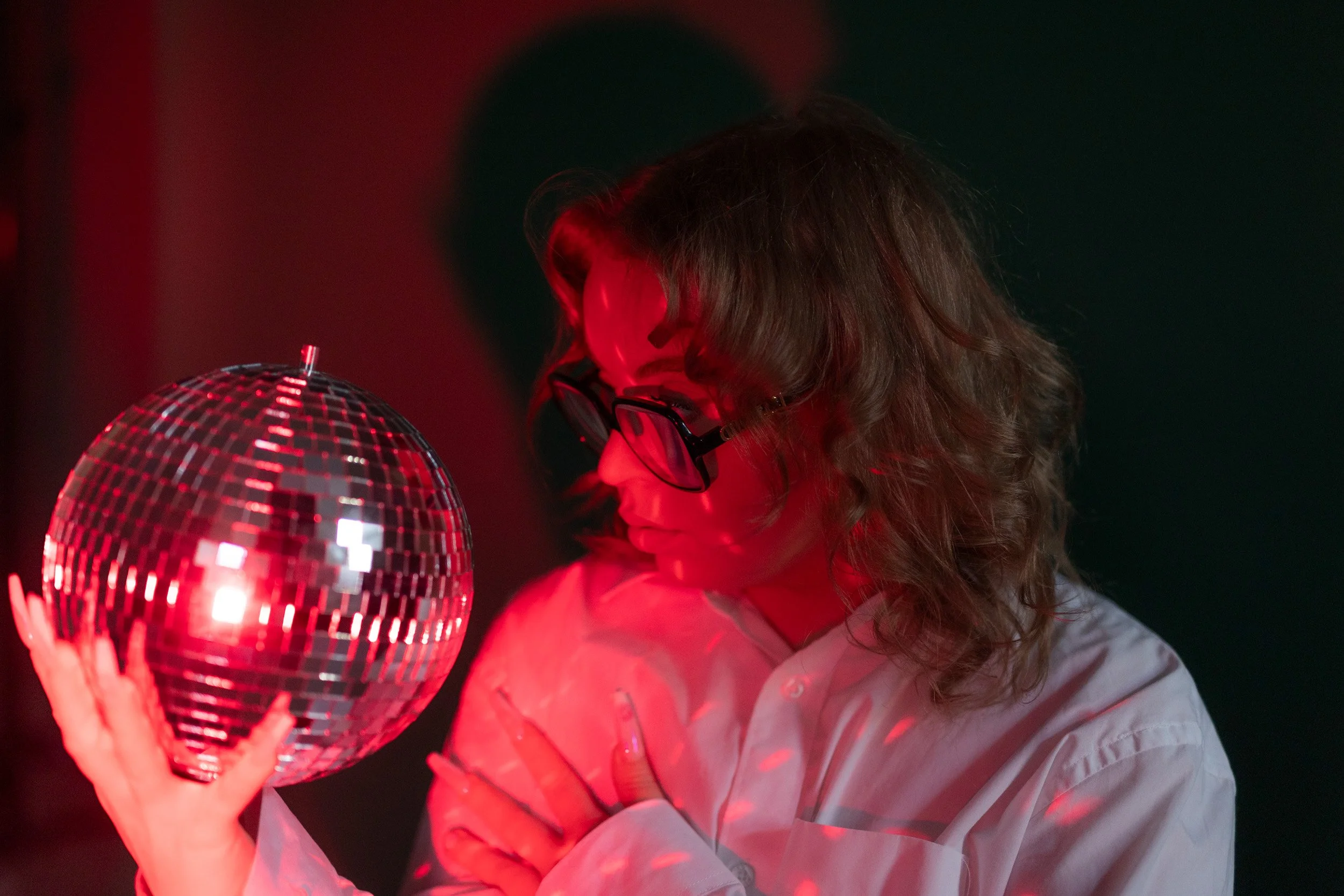
Do you have to know how to pose in photos?
I’d honestly love to throw the whole idea of posing in the bin. You don’t get authentic images of yourself by drilling poses. Every person’s anatomy is different. Our range of movement, the length of our limbs, the proportions of our bodies and our natural ways of standing and carrying ourselves all vary. For that reason, I think all those posing tips and “rules” can largely be forgotten. What works for one person doesn’t work for another. This is worth keeping in mind if you’re considering a photo session. Are you buying something off the shelf, or an experience that’s tailored to you?
It’s worth remembering this too when you’re taking photos of yourself or a friend is taking photos of you. Let go of fixed poses and experiment with different positions, movements, and angles. It’s worth taking a lot of photos. Think of it more as play and exploration than performance. When you look at the photos, try to set aside the ideas society has fed us about what counts as “good” or “beautiful”, and instead look for images that give you the feeling you’re seeing yourself as you truly are. You can play with different postures, angles and ways of expressing yourself. When you approach shooting this way, it becomes less serious, and at the same time you get used to being in front of the camera.
Throughout my sessions I guide the people I’m photographing, but my guidance is based more on creating a mood than on technical poses. I also always ask, before the session, that people tell me immediately if they don’t know what they’re supposed to be doing (and that always happens at some point) or what to do with their hands. That’s when I’ll step into your place and show you all the different things you can do in that particular set-up. At the heart of all my directing is agency and action. Doing different things instead of holding static poses helps many people block out nervousness and frustration. A fixed pose you’re trying to copy brings with it a huge amount of pressure, where your own performance and ability to “do it right” take centre stage. And when you look at the pictures afterwards, you inevitably compare yourself with the pose reference. This cycle of performing and comparing is exactly what I don’t want to even make remotely possible in The Session sessions.
My own background is in many years of dance. I can tell you: you learn a great deal about human anatomy and movement pathways by spending thousands of hours in a studio whose walls are mirrors. I draw heavily on my time in dance studios for my directing, but that’s not all there is to it. Directing is gentle interaction and the exchange of ideas. It’s encouragement and support. It’s meeting a person as their authentic self. What truly moves us in photos is the feeling, not how people look. You can’t capture feelings by repeating ready-made poses. They emerge when we pause in the moment and allow ourselves simply to be.
The hardest thing for us as humans is often facing ourselves as we are. Global capitalist market economy is fuelled by a sense of not being enough. Messages from our surroundings reinforce the idea that we should be something else, something “better”. That’s why I talk so much about letting go, about presence, and about kindness. These are skills you can learn. I’m not free from the pressure to perform or from generic beauty standards either, but I’ve actively worked to see myself more gently. My last tip in this text may be the hardest: learn to see yourself with compassion and kindness. The changes in your body and your unique features tell your story, and that is the most valuable story you have to share.
— Tinksu